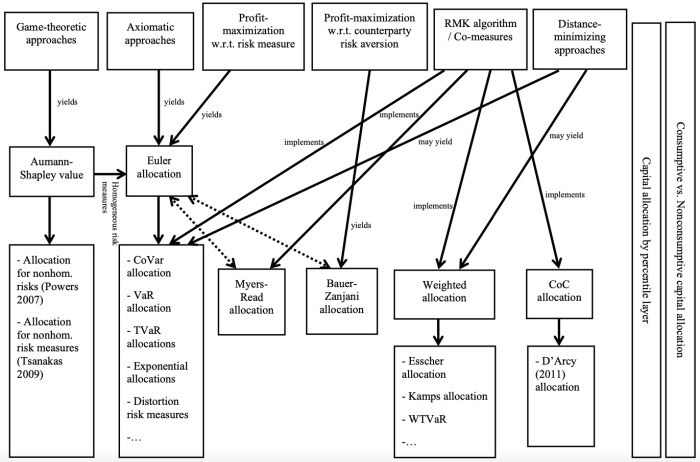
As Capital Allocation Techniques takes center stage, this opening passage beckons readers into a world crafted with good knowledge, ensuring a reading experience that is both absorbing and distinctly original.
Exploring the realm of financial management, capital allocation techniques play a crucial role in determining how businesses strategically distribute their resources to achieve optimal returns.
Capital Allocation Techniques

Capital allocation techniques in financial management involve the strategic distribution of funds across different investment opportunities to achieve the optimal balance of risk and return.
Examples of Capital Allocation Methods
- Equal-weighted method: Allocating the same percentage of funds to each investment option regardless of size or market conditions.
- Market-cap weighted method: Allocating funds based on the market capitalization of each investment option, giving larger weight to bigger companies.
- Risk-parity method: Allocating funds based on the level of risk associated with each investment option, aiming to balance risk exposure across the portfolio.
Importance of Effective Capital Allocation
Effective capital allocation is crucial for maximizing returns and minimizing risks in an investment portfolio. By diversifying investments and using different allocation strategies, investors can optimize their overall performance and achieve their financial goals.
Comparison of Capital Allocation Strategies
When comparing various capital allocation strategies, each method has its own advantages and limitations. Equal-weighted strategies provide equal exposure to all investments, while market-cap weighted strategies focus on the performance of larger companies. Risk-parity strategies aim to balance risk across the portfolio, ensuring a more stable return profile.
Capital Growth vs. Capital Allocation
When it comes to investment terms, capital growth refers to the increase in the value of an investment over time, usually measured in percentage terms. On the other hand, capital allocation involves the strategic distribution of funds across different assets or projects to maximize returns and manage risks effectively.
Effective Capital Allocation for Overall Capital Growth
Effective capital allocation plays a crucial role in contributing to overall capital growth for companies. By allocating capital wisely, companies can invest in projects or assets that offer the highest potential returns while minimizing unnecessary risks. This strategic approach can lead to increased profitability and shareholder value over time.
- Example 1: Apple Inc.
- Example 2: Berkshire Hathaway
Relationship between Capital Allocation Decisions and Long-term Growth
Capital allocation decisions have a direct impact on a company’s long-term growth prospects. When companies make sound capital allocation decisions, they can fuel innovation, expansion, and strategic investments that drive sustainable growth. Conversely, poor capital allocation can hinder growth and erode shareholder value.
Delving into the intricate realm of capital allocation techniques, it becomes evident that effective allocation strategies can pave the way for maximizing returns and fostering long-term financial growth.
General Inquiries
What are some common capital allocation methods used by businesses?
Some common capital allocation methods include equal-weighted, market-cap weighted, and risk-parity methods.
How does effective capital allocation contribute to overall capital growth?
Effective capital allocation ensures that resources are allocated strategically, maximizing returns and fostering growth.


