
Delve into the world of finance with a focus on Capital Growth vs. Capital Preservation, exploring the dynamics of investment strategies in an engaging narrative that promises insights and revelations.
As we navigate through the intricate details, we uncover the essence of balancing growth and preservation for optimal financial outcomes.
Capital Growth vs. Capital Preservation
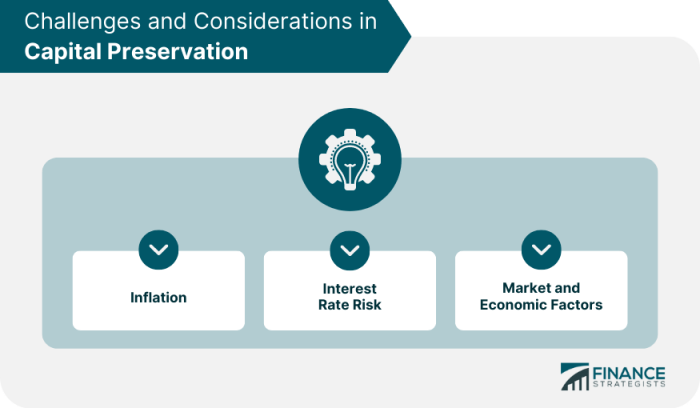
When it comes to investing, two key concepts that investors often consider are capital growth and capital preservation. Capital growth refers to the increase in the value of an investment over time, while capital preservation focuses on protecting the initial investment and minimizing the risk of loss.
Define Capital Growth
Capital growth is the appreciation of the value of an investment over a period of time. This increase can come from various sources such as asset price appreciation, dividends, interest, or capital gains.
Importance of Capital Preservation
Capital preservation is crucial in investment strategies as it aims to protect the initial investment and minimize the risk of loss. By focusing on preserving capital, investors can safeguard their wealth and ensure a more stable financial future.
Risks Comparison
- Capital Growth: Investing for capital growth often involves higher risks as investors may need to tolerate market volatility and fluctuations in order to achieve greater returns. This approach can lead to potential losses if the market takes a downturn.
- Capital Preservation: On the other hand, strategies focused on capital preservation are generally considered less risky as the goal is to protect the initial investment and prioritize stability over high returns. While this may result in lower potential gains, it also offers a more secure investment environment.
Investment Instruments for Capital Growth
- Stocks: Investing in growth stocks of companies with high growth potential can be a way to achieve capital growth. These stocks often reinvest earnings into the company for expansion and innovation, leading to increased stock prices.
- Mutual Funds: Growth-oriented mutual funds pool money from multiple investors to invest in a diversified portfolio of stocks with the aim of achieving capital appreciation over time.
- Real Estate: Property investment can also offer capital growth opportunities, especially in areas with high demand and potential for property value appreciation.
Capital Allocation
Capital allocation in financial planning refers to the process of distributing funds among different investment options based on an investor’s goals, risk tolerance, and time horizon. It involves determining how much of the portfolio should be allocated to different asset classes, such as stocks, bonds, real estate, or cash equivalents, to achieve a balance between growth and preservation of capital.
Factors to Consider When Allocating Capital
When allocating capital between growth and preservation, investors need to consider several key factors:
- Investment Objectives: Clearly define the purpose of the investment, whether it is for long-term growth, income generation, or capital preservation.
- Risk Tolerance: Assess how much risk an investor is willing to take and their ability to withstand fluctuations in the value of their investments.
- Time Horizon: Consider the time frame over which the funds will be invested and the investor’s financial goals for that period.
- Diversification: Spread investments across different asset classes to reduce risk and increase the potential for returns.
Strategies for Optimizing Capital Allocation
There are various strategies that investors can employ to optimize capital allocation:
- Asset Allocation: Determine the mix of asset classes that best align with the investor’s risk profile and financial goals.
- Rebalancing: Regularly review and adjust the portfolio to maintain the desired asset allocation and risk level.
- Tactical Allocation: Take advantage of short-term market opportunities by adjusting allocations based on market conditions.
- Dynamic Risk Management: Use hedging strategies or options to protect the portfolio from downside risks.
Impact of Effective Capital Allocation
Effective capital allocation can have a significant impact on the overall performance of a portfolio. By strategically allocating capital between growth and preservation assets, investors can achieve a balance that maximizes returns while managing risk. Proper capital allocation can help investors achieve their financial goals and secure their financial future.
In conclusion, the journey through Capital Growth vs. Capital Preservation unveils the critical nuances of investment decision-making, highlighting the significance of strategic planning for long-term financial success.
FAQs
What is the primary goal of capital growth?
Capital growth aims to increase the value of assets over time to achieve higher returns on investment.
How does capital preservation differ from capital growth?
Capital preservation focuses on protecting the initial investment and maintaining its value, prioritizing stability over high returns.
What are some common examples of investment instruments for capital growth?
Stocks, mutual funds, and real estate are typical examples of investment instruments that target capital growth.


