
Exploring the significance of capital growth in retirement planning, this discussion offers valuable insights and strategies to ensure a stable financial future.
From understanding the importance of investments to navigating risks, this topic sheds light on key aspects of securing retirement funds through capital growth.
Capital Growth for Retirement
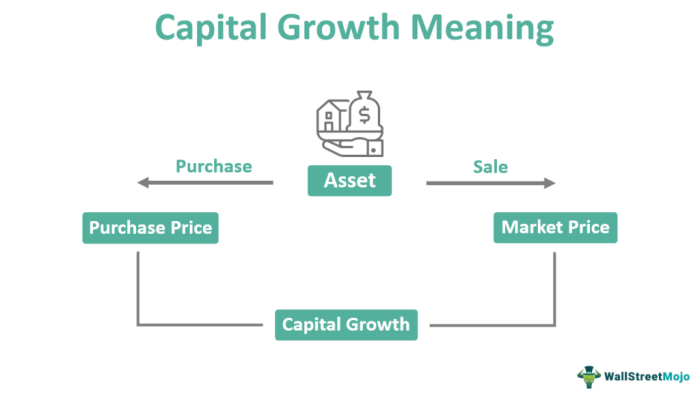
When planning for retirement, capital growth plays a crucial role in ensuring financial security for the future. It involves the increase in the value of assets over time, allowing individuals to build a substantial nest egg to support their retirement lifestyle.
Strategies for Achieving Capital Growth
- Investing in diversified portfolios: By spreading investments across different asset classes, individuals can reduce risk and maximize potential returns.
- Regularly reviewing and adjusting investment strategies: Monitoring market trends and adjusting investments accordingly can help optimize capital growth.
- Taking advantage of tax-efficient accounts: Utilizing retirement accounts with tax benefits can enhance capital growth by minimizing tax liabilities.
The Role of Investments in Generating Capital Growth
- Stocks and bonds: Investing in stocks and bonds can provide long-term capital growth potential, although they come with varying levels of risk.
- Real estate: Real estate investments can offer both capital appreciation and rental income, contributing to overall capital growth for retirement.
- Mutual funds and ETFs: These investment vehicles allow individuals to access diversified portfolios managed by professionals, potentially boosting capital growth.
Risks Associated with Capital Growth Investments for Retirement
- Market volatility: Fluctuations in the market can impact the value of investments and pose risks to capital growth.
- Inflation risk: Failure to keep pace with inflation can erode the purchasing power of retirement funds, affecting capital growth over time.
- Liquidity risk: Investments that lack liquidity may restrict access to funds when needed, potentially hindering capital growth for retirement expenses.
Capital Allocation
Capital allocation is a crucial aspect of financial planning that involves distributing funds among different asset classes to achieve a balance between risk and return based on an individual’s investment goals and risk tolerance.
Asset Classes for Capital Allocation
There are various asset classes available for effective capital allocation, each with its own characteristics and risk-return profiles. Some common examples include:
- Equities: Stocks represent ownership in a company and offer the potential for high returns but come with higher volatility.
- Bonds: Fixed-income securities issued by governments or corporations provide regular interest payments and are considered less risky than stocks.
- Real Estate: Investing in properties or real estate investment trusts (REITs) can offer diversification and potential for capital appreciation.
- Commodities: Investing in physical goods like gold, oil, or agricultural products can provide a hedge against inflation and economic uncertainties.
Methods of Capital Allocation for Retirement Planning
When it comes to retirement planning, there are different methods of capital allocation that individuals can consider based on their financial goals and risk tolerance. Two common approaches are:
- Strategic Asset Allocation: This method involves setting a target allocation for different asset classes based on long-term financial goals and periodically rebalancing the portfolio to maintain the desired mix.
- Tactical Asset Allocation: This approach involves making short-term adjustments to the asset allocation based on market conditions and economic outlook to capitalize on opportunities and manage risks.
Impact of Capital Allocation on Financial Stability
The decisions made regarding capital allocation can have a significant impact on long-term financial stability. By diversifying across different asset classes, investors can reduce overall portfolio risk and enhance the potential for consistent returns over time. However, poor capital allocation decisions, such as concentrating too heavily in one asset class or taking excessive risks, can expose investors to unnecessary volatility and jeopardize their financial security in retirement.
In conclusion, capital growth plays a pivotal role in building a robust retirement portfolio, highlighting the need for informed decisions and effective strategies to achieve long-term financial stability.
Commonly Asked Questions
What are the key strategies for achieving capital growth in retirement?
Some key strategies include diversifying investments, focusing on long-term growth, and regularly reviewing and adjusting your portfolio.
How can one mitigate risks associated with capital growth investments for retirement?
One way is to spread investments across different asset classes to reduce exposure to any single risk factor.
What impact do capital allocation decisions have on long-term financial stability?
Effective capital allocation decisions can help ensure a stable income stream during retirement and provide a financial cushion for unforeseen expenses.


