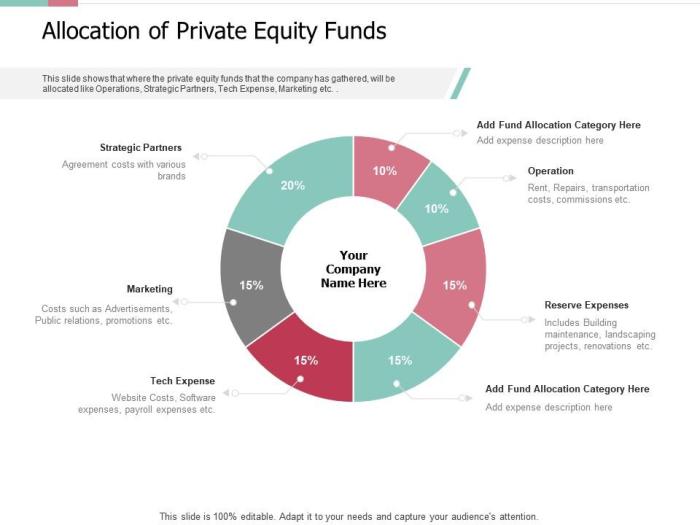
As Capital Allocation in Private Equity takes center stage, this opening passage beckons readers with casual formal language style into a world crafted with good knowledge, ensuring a reading experience that is both absorbing and distinctly original.
Private equity investments rely heavily on strategic capital allocation decisions to drive growth and maximize returns. Understanding the nuances of this process is key to success in the competitive landscape of private equity.
Capital Allocation in Private Equity

Capital allocation in private equity refers to the strategic distribution of funds among various investment opportunities within a private equity firm’s portfolio. It involves deciding how much capital to deploy in different investments to optimize returns and manage risks effectively.Effective capital allocation strategies are crucial in private equity investments as they directly impact the overall performance and success of the fund.
By allocating capital wisely, private equity firms can maximize returns, diversify risk, and seize profitable opportunities while minimizing potential losses.
Common Methods for Capital Allocation in Private Equity Firms
- Deal-by-Deal Approach: This method involves evaluating each investment opportunity separately and allocating capital based on the potential risk and return of each deal.
- Fund-Level Allocation: In this approach, capital is allocated across the entire fund’s portfolio, considering the fund’s investment strategy, sector focus, and risk appetite.
- Opportunistic Allocation: Private equity firms may also allocate capital opportunistically, seizing time-sensitive investment opportunities that align with the fund’s investment thesis.
Successful capital allocation decisions in private equity involve a thorough analysis of market trends, due diligence on potential investments, and a deep understanding of the fund’s objectives.
Capital Growth
Capital growth in private equity refers to the increase in the value of an investment over time. It is a key metric that investors look at to assess the performance and success of their investments. Capital growth is significant in private equity as it directly impacts the returns that investors can realize from their investments.
Significance of Capital Growth
Capital allocation strategies play a crucial role in driving capital growth in private equity investments. By effectively deploying capital into high-potential opportunities, investors can maximize the growth potential of their portfolios. Diversification, asset selection, and active management are key components of capital allocation strategies that can influence the overall capital growth of a private equity portfolio.
Factors Influencing Capital Growth
- Market Conditions: The overall economic environment and market trends can significantly impact the capital growth of private equity investments.
- Operational Performance: The operational efficiency and performance of the underlying companies in a private equity portfolio can directly affect capital growth.
- Industry Trends: Changes in industry dynamics and trends can create opportunities for capital growth in specific sectors.
- Exit Strategies: The timing and execution of exit strategies, such as IPOs or acquisitions, can influence the realization of capital growth in private equity investments.
Successful Capital Allocation Examples
Successful capital allocation can lead to significant capital growth over time. For example, a private equity firm that strategically invests in high-growth startups and provides operational support to help these companies scale can achieve substantial capital growth when these companies achieve successful exits. By carefully selecting and nurturing investments, private equity investors can unlock value and drive capital growth in their portfolios.
In conclusion, effective capital allocation is the cornerstone of successful private equity investments, enabling firms to unlock value and achieve substantial growth over time. By mastering the art of allocating capital strategically, investors can navigate challenges and capitalize on opportunities in the dynamic private equity market.
General Inquiries
What is the role of capital allocation in private equity?
Capital allocation in private equity involves distributing funds strategically to optimize investment returns and drive growth in portfolio companies.
How do capital allocation strategies impact capital growth in private equity?
Effective capital allocation strategies play a crucial role in fueling capital growth by directing resources towards high-potential opportunities and enhancing overall portfolio performance.
What are some key factors influencing capital growth in private equity portfolios?
Factors such as market conditions, industry trends, operational efficiency, and effective risk management can significantly influence capital growth in private equity portfolios.


