Embark on a journey exploring the nuances of Capital Allocation vs. Capital Budgeting, delving into how these decisions shape financial strategies with real-world implications.
Discover the key elements that differentiate these concepts and their impact on investment choices and business growth.
Capital Allocation
Capital allocation is the process of distributing financial resources among different areas or projects within a company. It is a crucial aspect of financial management as it determines how funds are invested to achieve the organization’s goals and objectives efficiently.
Key Factors Influencing Capital Allocation Decisions
- Business Strategy: The overall strategic direction of the company plays a significant role in determining where capital should be allocated.
- Return on Investment (ROI): Evaluating the potential return on investment of different projects helps in making informed capital allocation decisions.
- Risk Tolerance: Companies need to assess their risk tolerance levels to allocate capital in a way that aligns with their risk appetite.
- Market Conditions: External factors such as market trends, competition, and economic conditions can influence capital allocation strategies.
Approaches to Capital Allocation in Businesses
- Top-Down Approach: In this approach, senior management determines the overall budget and allocates capital to different departments or projects based on strategic priorities.
- Bottom-Up Approach: This approach involves input from various departments or project managers to allocate capital based on their specific needs and requirements.
- Equal Weighted Approach: Allocating capital equally to all projects or areas can be a simple method to ensure fairness, but it may not always be the most efficient.
Role of Risk Assessment in Capital Allocation
Risk assessment is crucial in determining capital allocation strategies as it helps businesses understand the potential risks associated with different investment opportunities. By evaluating risks, companies can make more informed decisions on where to allocate capital to achieve a balance between risk and return.
Capital Budgeting
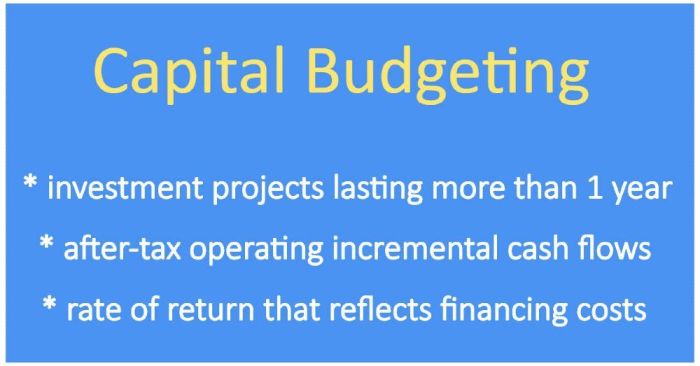
Capital budgeting is a crucial process that helps companies make informed decisions about long-term investments in projects or assets. It involves evaluating the potential profitability and feasibility of different investment opportunities to allocate financial resources efficiently.
Overview of Capital Budgeting Techniques
There are several techniques used in capital budgeting to analyze and compare investment projects:
- Net Present Value (NPV): NPV calculates the present value of cash inflows and outflows to determine the profitability of an investment. A positive NPV indicates a profitable project.
- Internal Rate of Return (IRR): IRR is the discount rate at which the NPV of an investment becomes zero. It helps in assessing the return on investment and comparing projects.
- Payback Period: Payback period calculates the time it takes for an investment to recover its initial cost. It is a simple method to evaluate the risk and liquidity of a project.
Importance of Capital Budgeting
Capital budgeting enables companies to assess the potential risks and returns associated with investment projects. It helps in making strategic decisions to maximize shareholder value and achieve long-term growth objectives.
Challenges and Limitations of Traditional Capital Budgeting Methods
Traditional capital budgeting methods may face challenges such as:
- Ignoring the time value of money: Not considering the present value of future cash flows can lead to inaccurate investment decisions.
- Difficulty in estimating cash flows: Forecasting future cash flows accurately can be challenging and may impact the reliability of investment evaluations.
- Ignoring risk factors: Traditional methods may overlook the risk associated with projects, leading to potential losses or missed opportunities.
Capital Allocation vs. Capital Budgeting
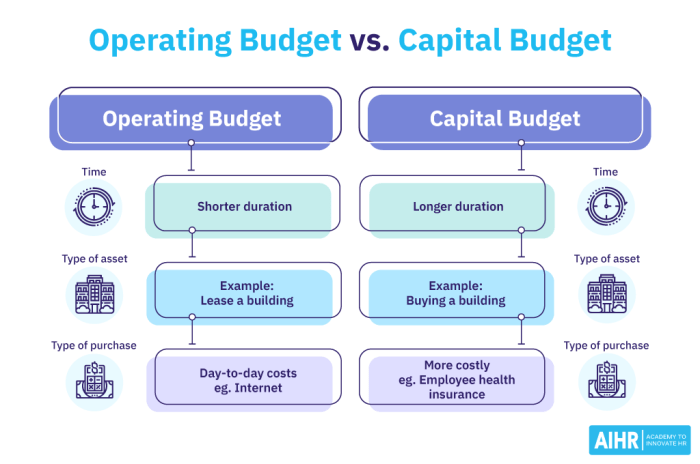
Capital allocation and capital budgeting are two crucial financial concepts that play a significant role in the strategic decision-making process of a company. While both are related to the allocation of funds, they differ in scope and purpose.
Differentiating Scope and Purpose
- Capital allocation focuses on determining how to distribute financial resources across different business units, projects, or investments within a company.
- Capital budgeting, on the other hand, is the process of planning and evaluating long-term investment decisions to ensure the efficient use of capital.
Comparing Processes
- Capital allocation involves assessing the risk-return profile of various investment opportunities and allocating funds based on strategic priorities.
- Capital budgeting requires analyzing the potential returns and costs of specific projects or investments to determine their financial viability.
Influencing Decisions
- Effective capital allocation can directly impact capital budgeting decisions by ensuring that resources are allocated to projects with the highest potential for return.
- Poor capital allocation may lead to suboptimal capital budgeting decisions, resulting in wasted resources and missed opportunities for growth.
Real-World Examples
- Apple Inc. strategically allocates capital to research and development projects that align with its long-term growth objectives, influencing its capital budgeting decisions for new product developments.
- A manufacturing company may allocate capital to upgrading production facilities, impacting its capital budgeting decisions on equipment purchases to improve operational efficiency.
Capital Growth
Capital growth refers to the increase in the value of assets or investments over time. It is a key indicator of financial health for businesses and investors, as it signifies the ability to generate returns and build wealth.
Significance of Capital Growth
Capital growth is crucial for businesses as it indicates the company’s ability to expand, reinvest, and generate higher profits. For investors, capital growth represents the potential for increasing the value of their investment portfolio and achieving financial goals.
Relationship between Capital Growth and Profitability
- Capital growth and profitability are closely linked, as higher profits can contribute to the growth of capital through reinvestment or expansion.
- Profitable businesses are more likely to experience capital growth, as they have the resources to invest in new opportunities and enhance their competitive position in the market.
Strategies for Achieving Sustainable Capital Growth
- Focus on long-term investments that have the potential for steady growth over time.
- Diversify the investment portfolio to reduce risk and maximize returns.
- Regularly review and adjust investment strategies based on market conditions and performance.
Impact of Capital Growth on Financial Performance and Market Competitiveness
- Strong capital growth can improve a company’s financial performance by increasing revenue, profitability, and shareholder value.
- Businesses with consistent capital growth are viewed more favorably by investors and stakeholders, enhancing market competitiveness.
In conclusion, the dynamic interplay between Capital Allocation and Capital Budgeting underscores the essence of strategic financial planning, paving the way for informed decision-making and sustainable growth.
FAQ Explained
What is the main difference between Capital Allocation and Capital Budgeting?
Capital Allocation focuses on distributing resources efficiently within a company, while Capital Budgeting is specifically about evaluating potential investment projects.
How do risk assessment factors into Capital Allocation decisions?
Risk assessment plays a crucial role in determining how resources should be allocated among different projects to optimize returns and minimize potential losses.
Can you provide an example of how Capital Allocation and Capital Budgeting are interconnected?
For instance, a company’s decision to allocate more capital to a high-return project based on capital budgeting analysis directly impacts the overall resource distribution within the organization.


