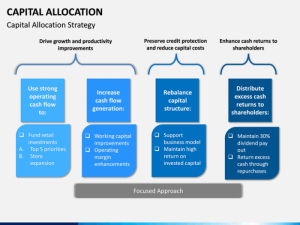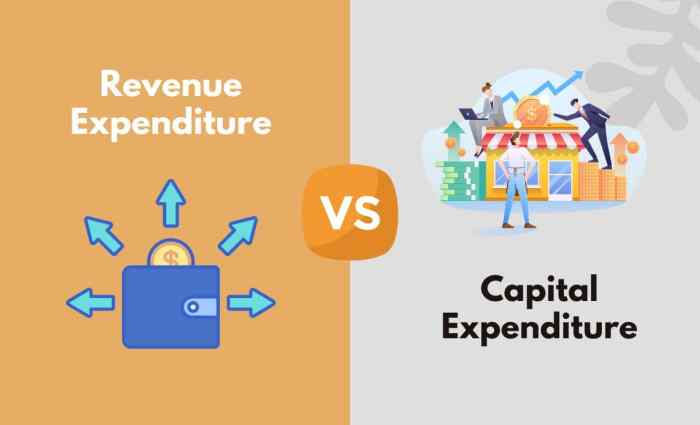
Capital Allocation vs. Capital Expenditure sets the stage for this enthralling narrative, offering readers a glimpse into a story that is rich in detail and brimming with originality from the outset. Exploring the intricate world of financial decision-making, this comparison sheds light on the fundamental differences between where a company puts its money and how it spends it.
Delving into the nuances of capital allocation and capital expenditure, this discussion uncovers the strategic implications of these choices and their profound impact on a company’s financial health.
Capital Allocation vs. Capital Expenditure
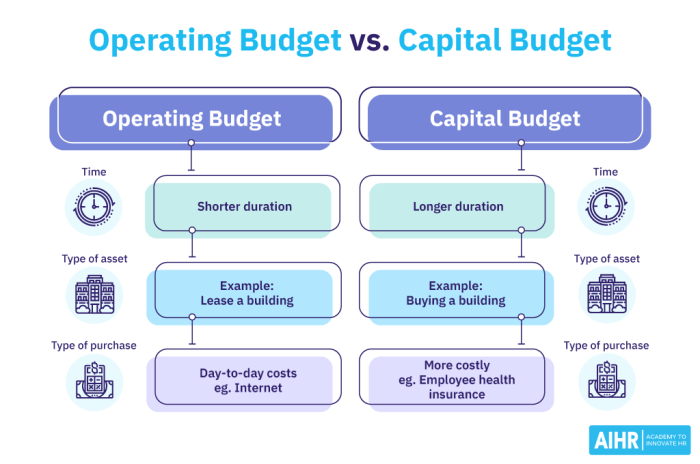
Capital allocation and capital expenditure are both crucial aspects of financial management for companies, but they serve different purposes and have distinct impacts on a company’s financial health.Capital allocation involves determining how a company’s financial resources will be distributed among different projects, divisions, or investments. It is about strategically deciding where to invest money to generate the highest returns and create long-term value for the company.
On the other hand, capital expenditure refers to the funds spent by a company to acquire, upgrade, or maintain physical assets such as property, equipment, or technology.
Key Differences
- Capital allocation focuses on the overall strategy and long-term goals of the company, while capital expenditure deals with specific investments in tangible assets.
- Capital allocation involves evaluating various investment opportunities and choosing the most promising ones, whereas capital expenditure is more about the actual spending on necessary assets.
- Effective capital allocation requires a deep understanding of the market, competition, and internal capabilities, while capital expenditure decisions are more operational and budget-driven.
Examples
- Capital Allocation Decision: A company decides to allocate a significant portion of its budget to research and development projects aimed at developing innovative products to stay ahead of competitors.
- Capital Expenditure Decision: The same company invests in upgrading its manufacturing facilities to increase production capacity and improve efficiency.
Impact on Financial Health
Effective capital allocation is essential for ensuring the long-term success and sustainability of a company. By allocating resources to projects with high potential returns and strategic alignment with the company’s goals, a company can maximize its profitability and shareholder value. On the other hand, poor capital allocation decisions can lead to wasted resources, missed opportunities, and ultimately, financial difficulties for the company.
Capital Allocation
Capital allocation is a crucial process for companies to determine how to best invest their resources in order to achieve their strategic goals.
Strategies and Approaches
When it comes to capital allocation, companies utilize various strategies and approaches to make informed decisions. Here are some of the key methods:
- Top-Down Approach: In this strategy, senior management sets the overall budget and priorities for capital allocation. They determine the allocation of resources based on the company’s overarching goals and objectives.
- Bottom-Up Approach: Contrary to the top-down approach, the bottom-up strategy involves input from lower-level employees and departments. They provide insights and recommendations on how resources should be allocated based on their specific knowledge and expertise.
It is essential for companies to strike a balance between top-down and bottom-up approaches to ensure comprehensive decision-making.
Priority Setting Based on Strategic Goals
Companies prioritize their capital allocation decisions by aligning them with their strategic goals. This involves evaluating each investment opportunity against the company’s objectives and selecting projects that will drive the most value.
- Projects that are in line with the company’s long-term vision and growth objectives are typically given higher priority.
- Financial metrics such as return on investment (ROI) and internal rate of return (IRR) are used to assess the potential impact of each investment on the company’s bottom line.
- Additionally, companies may consider factors such as risk, market conditions, and competitive landscape when making capital allocation decisions.
Capital Expenditure
Capital expenditure refers to the funds that a company invests in acquiring, maintaining, or improving fixed assets such as property, plant, and equipment. It is essential for companies to carefully plan and implement capital expenditure projects to ensure long-term growth and sustainability.
Planning Capital Expenditures
Before embarking on any capital expenditure project, companies need to consider various factors to ensure its success. Some of the key steps involved in planning capital expenditures include:
- Conducting a thorough analysis of the current state of assets and identifying areas that require investment.
- Setting clear objectives and goals for the project to align with the company’s overall strategy.
- Evaluating different options and selecting the most viable capital expenditure projects based on their potential return on investment.
- Developing a detailed budget and timeline for the project to ensure efficient use of resources.
Evaluating Potential Projects
When evaluating potential capital expenditure projects, companies typically use specific criteria to determine their feasibility and potential impact. Some common criteria include:
- Return on Investment (ROI): Assessing the expected financial return compared to the initial investment.
- Risk Analysis: Evaluating the risks associated with the project and developing mitigation strategies.
- Strategic Alignment: Ensuring that the project aligns with the company’s long-term goals and objectives.
- Payback Period: Determining the time it takes for the project to generate enough cash flow to cover its initial costs.
Challenges in Implementation
Implementing large-scale capital expenditure projects can pose various challenges for companies, including:
- Cost Overruns: Projects may exceed their initial budget due to unforeseen circumstances or poor cost estimation.
- Resource Constraints: Limited availability of skilled labor or materials can delay project timelines.
- Technological Changes: Rapid advancements in technology may render investments obsolete before completion.
- Regulatory Compliance: Meeting changing regulatory requirements can add complexity and costs to projects.
Capital Growth
Capital growth is crucial for a company’s long-term sustainability as it reflects the ability of the business to increase its financial resources over time. This growth enables the company to invest in new projects, expand operations, and remain competitive in the market.
Key Factors Contributing to Sustainable Capital Growth
- Strong Revenue Growth: A consistent increase in revenue is essential for generating profits and reinvesting in the business.
- Cost Management: Efficient cost control measures help maximize profits and contribute to capital growth.
- Market Positioning: Maintaining a strong market position through strategic planning and innovation can drive growth opportunities.
- Financial Discipline: Sound financial management practices ensure resources are allocated effectively to support growth initiatives.
Role of Effective Capital Allocation in Driving Capital Growth
Effective capital allocation is a critical factor in driving capital growth as it determines where and how the company invests its financial resources. By strategically allocating capital to areas that offer the highest returns and growth potential, companies can optimize their resources and fuel sustainable growth.
In conclusion, the juxtaposition of Capital Allocation vs. Capital Expenditure reveals the intricate dance companies perform to balance their financial resources efficiently. By understanding and mastering these concepts, businesses can navigate the complex terrain of financial management with greater clarity and foresight.
FAQ Insights
What distinguishes capital allocation from capital expenditure?
Capital allocation involves deciding where to invest funds for long-term growth, while capital expenditure focuses on spending for immediate benefits like equipment or assets.
How do companies prioritize capital allocation decisions?
Companies prioritize capital allocation based on strategic goals, choosing projects that align with their long-term objectives and growth strategies.
What challenges are associated with implementing large-scale capital expenditure projects?
Large-scale capital expenditure projects often face challenges related to budget management, resource allocation, and ensuring the projects deliver the expected returns on investment.