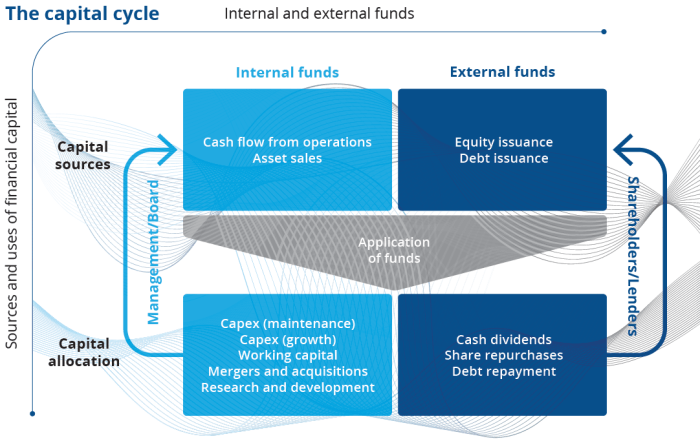
Capital Allocation Framework sets the stage for this enthralling narrative, offering readers a glimpse into a story that is rich in detail with casual formal language style and brimming with originality from the outset.
As businesses strive for growth and sustainability, the concept of capital allocation plays a crucial role in shaping their strategic decisions and future success.
Capital Allocation Framework
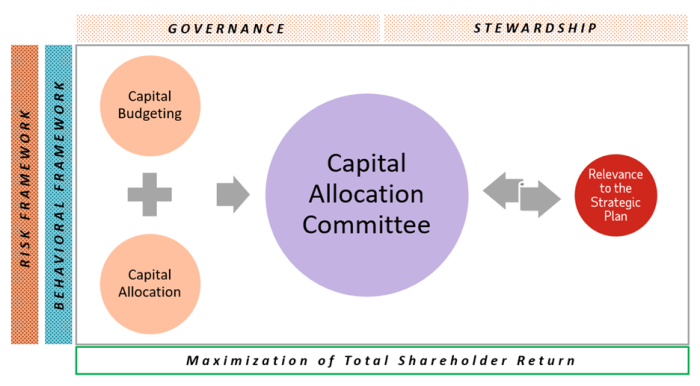
A capital allocation framework is a systematic approach used by businesses to determine how to allocate their financial resources effectively. It involves evaluating different investment opportunities and deciding where to allocate capital based on the company’s strategic goals, risk tolerance, and expected returns.
Importance of a Structured Capital Allocation Framework
Having a structured capital allocation framework is crucial for businesses to make informed decisions about where to invest their resources. It helps ensure that capital is allocated in a way that maximizes shareholder value and supports the company’s long-term growth objectives.
Key Components of a Capital Allocation Framework
- Evaluation criteria: Clearly defined criteria for assessing investment opportunities based on factors such as potential return on investment, strategic fit, and risk profile.
- Resource allocation: Determining the amount of capital to allocate to each investment opportunity while considering the company’s overall financial position.
- Decision-making process: Establishing a transparent process for evaluating and approving investment proposals, including governance structures and stakeholder involvement.
- Monitoring and review: Implementing mechanisms to track the performance of investments over time and make adjustments as needed based on actual outcomes.
Different Approaches to Designing a Capital Allocation Framework
There are various approaches to designing a capital allocation framework, depending on the nature of the business and its strategic priorities. Some companies may use a centralized approach, where decisions are made at the corporate level, while others may adopt a decentralized approach, delegating decision-making to individual business units. Hybrid models that combine elements of both approaches are also common, allowing for flexibility and customization based on specific circumstances.
Strategies for Capital Allocation
Capital allocation is a critical decision-making process within organizations that involves determining where to invest resources for maximum return. Various strategies are employed to ensure that capital is allocated efficiently and effectively.
Diversification
- Diversification is a strategy that involves spreading capital across different assets or business units to reduce risk.
- By diversifying investments, organizations can minimize the impact of downturns in specific industries or markets.
Growth Investment
- Investing in growth opportunities is another common capital allocation strategy used by organizations.
- By allocating capital towards projects or initiatives with high growth potential, companies can expand their market presence and increase revenue.
Acquisitions and Mergers
- Acquiring or merging with other companies is a strategic way to allocate capital for growth and expansion.
- These transactions allow organizations to gain access to new markets, technologies, or customer bases.
Risk Assessment
- Risk assessment plays a crucial role in determining capital allocation strategies.
- By evaluating the potential risks associated with different investment options, organizations can make informed decisions about where to allocate capital.
Industry and Company Size
- Capital allocation strategies can vary based on the industry in which a company operates.
- For example, a technology company may prioritize investments in research and development, while a manufacturing company may focus on upgrading production facilities.
- Similarly, the size of the company can also influence capital allocation decisions, with larger organizations having more resources to allocate across different projects.
Capital Growth
When it comes to financial management, capital growth is a crucial aspect that businesses aim to achieve. It refers to the increase in the value of assets or investments over time.
Distinguishing Capital Allocation and Capital Growth
Capital allocation involves deciding how to distribute financial resources across different investment opportunities, projects, or divisions within a company. On the other hand, capital growth focuses on increasing the overall value of these investments or assets.
Relationship between Effective Capital Allocation and Achieving Capital Growth
- Effective capital allocation plays a vital role in achieving capital growth as it ensures that resources are allocated to projects or investments with the highest potential for returns.
- By strategically allocating capital to areas that have the most growth opportunities, businesses can accelerate their overall financial growth and increase the value of their assets.
Examples of Strategic Capital Allocation Leading to Significant Capital Growth
- One example of strategic capital allocation leading to significant growth is when a company invests in research and development to create innovative products that capture market demand and generate substantial profits.
- Another example is when a business allocates capital towards expanding into new markets or acquiring complementary businesses, resulting in increased revenue and market share.
Challenges in Balancing Capital Allocation for Growth
- One of the challenges businesses may face in balancing capital allocation for growth is the trade-off between short-term gains and long-term sustainable growth. Sometimes, investments with higher short-term returns may not align with the company’s long-term growth strategy.
- Additionally, businesses need to consider the risk associated with different investment opportunities and ensure they have a diversified portfolio to mitigate potential losses that could hinder overall capital growth.
In conclusion, the Capital Allocation Framework provides a roadmap for businesses to make informed decisions regarding resource allocation, ultimately paving the way for sustainable growth and long-term success.
FAQ Resource
What is a capital allocation framework?
A capital allocation framework is a structured approach that helps businesses prioritize and allocate resources effectively to achieve strategic goals.
Why is having a structured capital allocation framework important for businesses?
Having a structured capital allocation framework ensures that resources are allocated efficiently, maximizing returns and minimizing risks for the business.
How can capital allocation strategies vary based on industry or company size?
Capital allocation strategies can vary based on factors such as industry dynamics, risk tolerance levels, and the size of the company, influencing decisions on investments and resource allocation.


