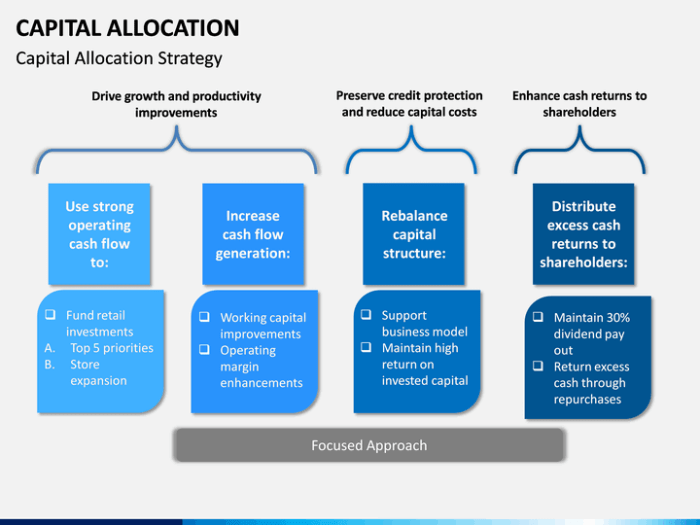
Embark on a journey into the realm of Capital Allocation Model, where strategic decisions shape the path to financial success. Learn how businesses navigate the intricate process of allocating resources to maximize efficiency and drive growth.
Explore the fundamental concepts and practical applications that underpin this crucial framework in the world of finance and investment.
Understanding Capital Allocation Model
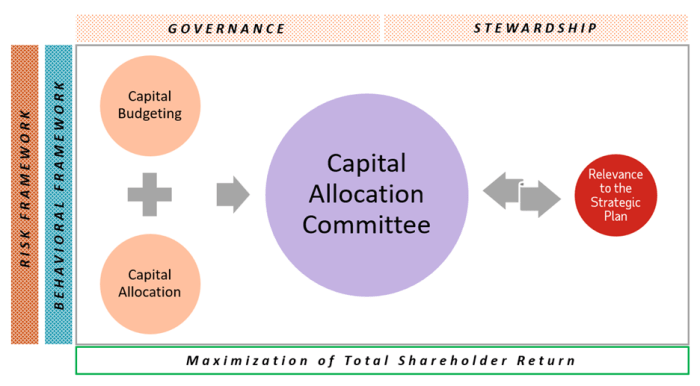
A Capital Allocation Model is a strategic framework used by organizations to determine how to allocate financial resources across different business units, projects, or investments. It helps in optimizing the use of capital to maximize returns and achieve strategic objectives.
Having a well-defined Capital Allocation Model is crucial for organizations to ensure that resources are allocated efficiently and in alignment with the overall business strategy. It helps in prioritizing investments, managing risks, and evaluating the performance of different business units or projects.
Types of Capital Allocation Models
- Equal Weighting Model: In this model, capital is allocated evenly across all business units or projects, regardless of their individual performance or strategic importance.
- Return on Investment (ROI) Model: This model allocates capital based on the potential return on investment of each business unit or project, with higher returns receiving more capital.
- Risk-adjusted Return Model: Capital is allocated considering both the potential return on investment and the level of risk associated with each business unit or project.
- Opportunity Cost Model: This model factors in the opportunity cost of allocating capital to one investment over another, taking into account the potential returns foregone.
Components of a Capital Allocation Model
When constructing a Capital Allocation Model, several key components play a crucial role in determining the effectiveness of the model. Each component brings a unique perspective and contributes to the overall decision-making process.
Risk Assessment
Risk assessment is a fundamental component of a Capital Allocation Model as it helps in evaluating the potential risks associated with different investment opportunities. By quantifying and analyzing risks, decision-makers can make informed choices while allocating capital.
Return Expectations
Return expectations Artikel the anticipated returns from various investment options. This component assists in aligning the investment strategy with the organization’s financial goals and overall risk tolerance.
Cost of Capital
The cost of capital is a critical factor in determining the feasibility of an investment. By considering the cost of obtaining funds, organizations can assess the profitability of potential projects and allocate capital efficiently.
Strategic Objectives
Strategic objectives define the long-term goals and vision of the organization. By aligning capital allocation decisions with strategic objectives, companies can ensure that resources are allocated to projects that support the overall mission and growth trajectory.
Performance Metrics
Performance metrics provide a framework for evaluating the success of capital allocation decisions. By tracking key performance indicators, organizations can assess the effectiveness of their investments and make adjustments as needed.
Factors Influencing Capital Allocation
The decisions regarding capital allocation in businesses are influenced by a variety of external and internal factors. These factors play a crucial role in shaping the strategies that organizations adopt when distributing their financial resources.
External Factors
- Market Conditions: Fluctuations in the market, including interest rates, inflation, and overall economic stability, can impact how businesses allocate their capital. For instance, during times of economic downturn, companies may prioritize cost-cutting measures over expansion projects.
- Regulatory Environment: Changes in regulations and government policies can also influence capital allocation decisions. For example, new tax laws or environmental regulations may require companies to invest in compliance measures, affecting their overall allocation strategy.
- Competitive Landscape: The actions of competitors and market trends can drive businesses to allocate capital towards areas that will give them a competitive edge. For instance, if a competitor introduces a new technology that threatens market share, a company may allocate more capital towards research and development to stay ahead.
Internal Factors
- Corporate Strategy: The overall goals and objectives of a company can heavily influence how capital is allocated. For example, a company focused on growth may allocate more capital towards expansion projects, while a company aiming for stability may prioritize dividends and share buybacks.
- Financial Health: The financial position of a company, including cash flow, debt levels, and profitability, can impact capital allocation decisions. A company with strong financials may be more willing to take on additional debt for growth opportunities, while a company with limited cash flow may prioritize debt repayment.
- Management Priorities: The preferences and priorities of company management can also shape capital allocation strategies. For instance, a CEO with a background in marketing may allocate more capital towards advertising campaigns, while a CFO with a finance background may prioritize cost-saving initiatives.
Capital Allocation vs. Capital Growth
When comparing Capital Allocation and Capital Growth, it’s important to understand that they are closely related but serve different purposes in financial management. Capital Allocation refers to the strategic distribution of funds across various assets or projects within a company, aiming to optimize returns and manage risks. On the other hand, Capital Growth focuses on increasing the overall value of investments over time.
How a Strong Capital Allocation Model Contributes to Capital Growth
A robust Capital Allocation Model plays a crucial role in driving Capital Growth by ensuring that resources are allocated efficiently and effectively. By prioritizing investments with higher potential returns and diversifying across different asset classes, companies can enhance their chances of achieving sustainable growth over the long term.
- Optimizing Risk-Return Tradeoff: A well-designed Capital Allocation Model helps in balancing risk and return by identifying opportunities that offer a favorable risk-reward profile. By allocating resources based on this principle, companies can maximize their growth potential while mitigating potential losses.
- Resource Allocation: Effective Capital Allocation allows companies to allocate resources to projects or assets that have the highest growth prospects. This targeted approach enhances the overall performance of the investment portfolio and accelerates Capital Growth.
Scenarios of Effective Capital Allocation Leading to Significant Capital Growth
- Tech Company Expansion: A technology company strategically allocates capital towards research and development of innovative products, leading to a competitive edge in the market. This focused investment approach results in exponential growth and increased market share.
- Real Estate Investment: A real estate firm diversifies its capital allocation across residential, commercial, and industrial properties, capitalizing on emerging trends and market demands. This prudent allocation strategy drives substantial growth in property value and rental income.
In conclusion, the Capital Allocation Model serves as a cornerstone for prudent financial management, guiding organizations towards sustainable growth and prosperity. By understanding the nuances of resource allocation, businesses can chart a course for long-term success in a competitive landscape.
Questions and Answers
What is the primary objective of a Capital Allocation Model?
The main goal is to efficiently allocate resources to different business units or projects to maximize overall performance and returns.
How do external factors impact Capital Allocation decisions?
External factors like economic conditions, market trends, and regulatory changes can influence resource allocation strategies.
Is there a one-size-fits-all approach to structuring components of a Capital Allocation Model?
No, companies may tailor the components based on their specific needs and goals, leading to varied approaches in structuring the model.