
Embark on a journey to discover the key strategies for achieving capital growth in the competitive world of investments. From maximizing returns to effective risk management, this guide covers it all.
Learn how to navigate the complex landscape of capital allocation and make informed decisions that will propel your financial growth to new heights.
What is Capital Allocation?
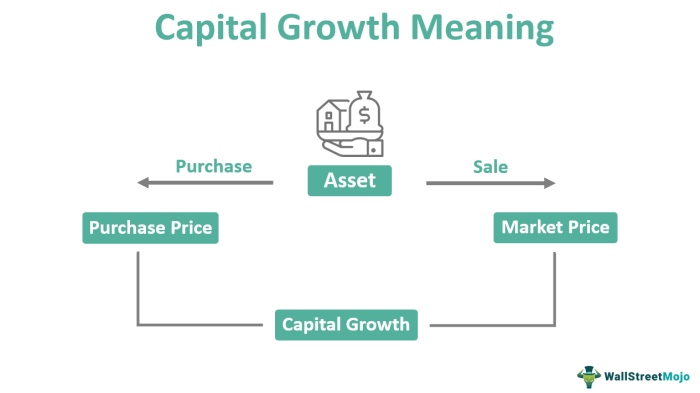
Capital allocation refers to the strategic distribution of resources within a company to different projects, divisions, or investments. It involves deciding how to deploy capital effectively to maximize returns and achieve long-term growth.
Effective capital allocation is crucial for achieving capital growth as it ensures that resources are utilized in the most efficient and profitable way. By allocating capital wisely, companies can invest in opportunities that have the highest potential for returns, thus driving overall growth and increasing shareholder value.
Examples of Effective Capital Allocation Strategies
- 1. Diversification: Allocating capital across different industries or asset classes to reduce risk and maximize returns.
- 2. Research and Development: Investing in innovation and new product development to drive future growth and maintain a competitive edge.
- 3. Mergers and Acquisitions: Using capital to acquire complementary businesses or assets that can create synergies and enhance overall value.
- 4. Share Buybacks: Repurchasing company shares to signal confidence in the business and return capital to shareholders.
- 5. Debt Repayment: Allocating capital to pay down debt and improve financial flexibility, reducing interest expenses and strengthening the balance sheet.
Strategies for Achieving Capital Growth
Achieving capital growth through investments requires careful planning and execution of strategies that align with your financial goals. Different investment strategies can be employed to maximize returns and grow your capital over time. Let’s explore some key strategies below.
Long-Term vs. Short-Term Investment Strategies
When aiming for capital growth, investors can choose between long-term and short-term investment strategies. Long-term strategies involve holding onto investments for an extended period, typically five years or more. This approach allows investors to benefit from compounding returns and ride out market fluctuations. On the other hand, short-term strategies focus on capitalizing on immediate market opportunities to generate quick profits.
While short-term strategies can be more volatile, they offer the potential for higher returns in a shorter timeframe.
The Role of Diversification
Diversification is a fundamental strategy for achieving capital growth while managing risk. By spreading your investments across different asset classes, industries, and geographic regions, you can reduce the impact of market volatility on your portfolio. Diversification helps to protect your capital from significant losses in any single investment and ensures that you have exposure to various growth opportunities. Additionally, it can enhance overall portfolio performance by capturing gains from different sectors or regions that outperform others.
Importance of Risk Management
Risk management plays a crucial role in achieving capital growth by safeguarding investments from potential losses and ensuring a more stable and predictable growth trajectory. By identifying, assessing, and mitigating risks, investors can protect their capital and enhance long-term returns.
Role of Risk Management in Capital Growth
Risk management is essential in capital growth as it helps investors navigate uncertainties and volatility in the market. By implementing effective risk management strategies, investors can minimize the impact of adverse events and protect their investment portfolios from significant losses. This proactive approach allows investors to maintain a more consistent growth rate and achieve their financial goals over time.
Risk Management Techniques to Protect Capital Growth
Diversification
Spreading investments across different asset classes and industries to reduce concentration risk.
Stop-loss orders
Setting predetermined price levels to automatically sell an asset if it reaches a certain point, limiting potential losses.
Hedging
Using derivatives or other financial instruments to offset potential losses in a specific investment.
Asset allocation
Allocating resources strategically based on risk tolerance and investment objectives to balance risk and return.
Risk Assessment and Capital Allocation Decisions
Risk assessment plays a critical role in determining how capital should be allocated across various investments. By evaluating the risk profile of different assets, investors can make informed decisions on where to allocate capital based on their risk appetite and investment goals. A thorough risk assessment process ensures that capital is allocated efficiently and in a way that maximizes returns while managing downside risk effectively.
Maximizing Returns
When aiming for capital growth, maximizing returns is crucial to achieving your financial goals. By effectively managing your investments and making strategic decisions, you can increase the growth of your capital over time.
The Impact of Compounding
Compounding plays a significant role in maximizing returns for capital growth. It involves earning returns on both the initial investment and the accumulated earnings from previous periods. Over time, compounding can significantly boost the growth of your capital, especially when reinvesting profits.
- Compound interest allows your money to grow exponentially, as you earn returns on your initial investment and the returns generated over time.
- Reinvesting the profits from your investments can accelerate capital growth by increasing the principal amount on which future returns are calculated.
- Consistent reinvestment of profits can lead to a snowball effect, where your capital grows at an increasing rate over time.
In conclusion, mastering the art of capital growth requires a combination of strategic planning, risk management, and a keen eye for maximizing returns. Armed with these insights, you are well-equipped to embark on your path to financial success.
FAQ Resource
What is the role of diversification in achieving capital growth?
Diversification helps spread risk across different assets, reducing the impact of any single investment underperforming.
How does compounding impact capital growth?
Compounding allows your returns to generate further returns over time, accelerating your capital growth exponentially.


